
Analog Evangelist
How AI Sent Me Back to My Roots

I’ve always been a little bit ambidextrous. I don’t mean that I can write equally well with both my right and left hands (I can’t). I mean that I often find myself at the cross section of significant changes: changes in culture, changes in technology, that type of thing.
The first time I ventured into ambidextrousness I didn’t realize it was happening in the moment. Only on retrospect did I realize I learned to embrace two sides of a denominational coin that many people do not. My family attended a variety of church denominations in my childhood. We attended Southern Baptist, Free Methodist, Evangelical Free, and one I’ll cautiously call a straight up cult. I didn’t know who Calvin or Luther were or anything about their battle for the Protestant heart (various doctrinal differences). It didn’t matter to me. Church was community. Until it wasn’t (there’s a different post on that). It was only once I entered seminary that I realized how odd my embrace of a sort of doctrinal charcuterie board was.
My next foray into ambidextrous living took place at home. I grew up with a 10’ coil cabled telephone in the kitchen that was stretched beyond repair. I had to stand up to change the channel on the TV until first grade. I was the family technology expert tasked with things like setting up my grandparents’ stereo system and fixing the VCR once when it kept eating tapes. My family got a home computer and the internet in the same year when I was in ninth grade. I was comfortable across the new and the old. I lived well in both.
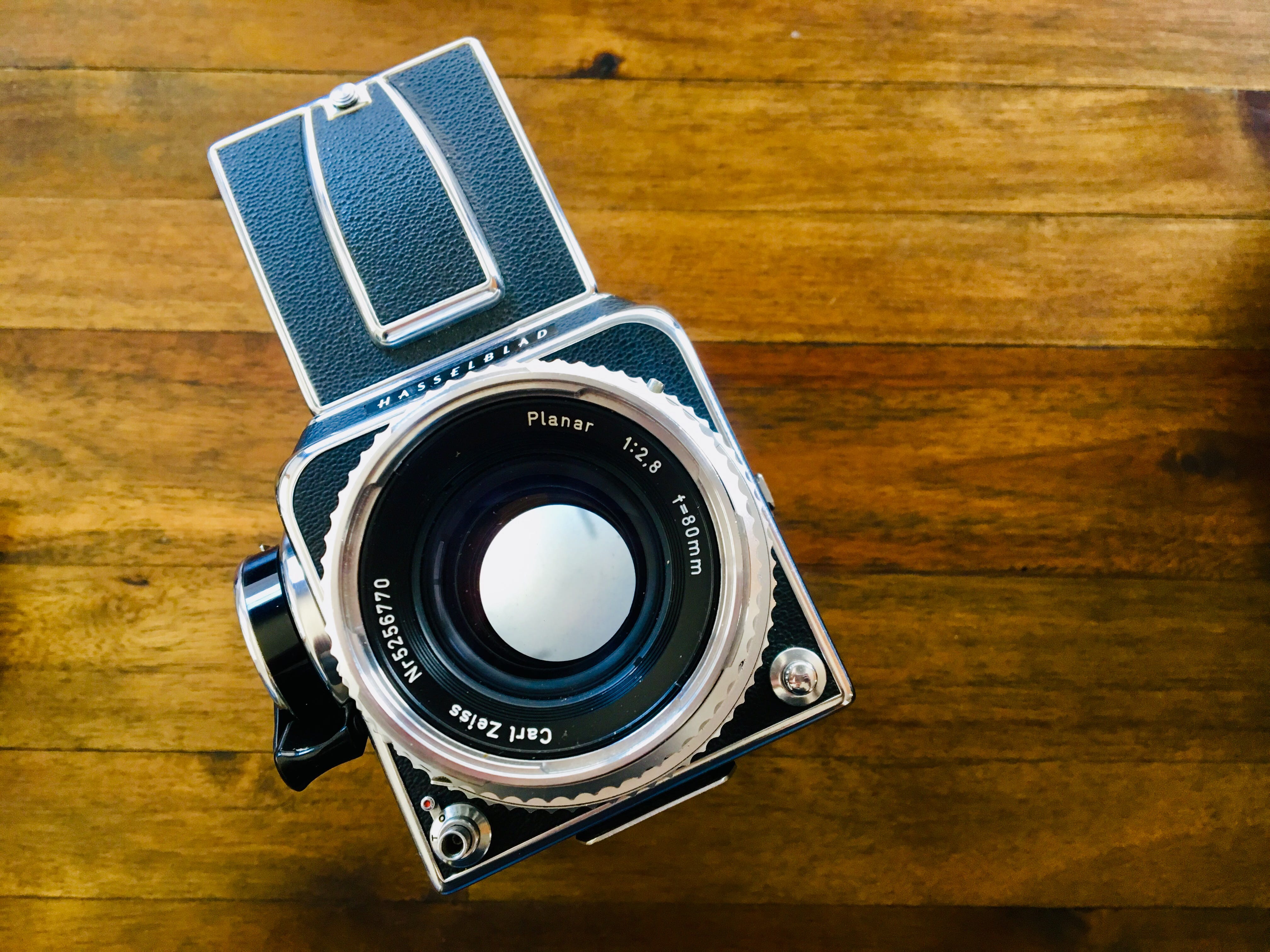
While I worked at a local camera shop in Long Beach California I came into another embrace of my growing ambidextrousness. I worked there when digital cameras first came to market for consumer use. Half of our sales counter was dedicated to 35mm film cameras while the other half were digital cameras. There was a singular pro-level DSLR at the shop the year I started working there.
As a person on the sales floor I had to be equally comfortable with both styles of photography: analog and digital. I adapted quickly not realizing that in a few years time equal knowledge of both photographic technologies would begin to diminish as digital took over the industry. I look at my photography students today that have only ever experienced photography through a screen and I’m surprised and saddened. I realize with the speed of technology that I shouldn’t be, yet here I am.
When the pandemic hit and I found myself a freshly minted MFA graduate with few job prospects in the middle of a heavy shut down I returned to what was familiar to me: analog photography. It probably helped that I had just completed my thesis using 4 x 5 sheet film, but I digress. I needed to pick up a few rolls of film and so I found myself back at my old familiar camera shop.
When I arrived I was told that they were out of stock. For those outside of the photography world no camera store in existence ever has been out of stock of film in the last 20+ years. Probably longer.
I spoke with the owner about why. I theorized it was all related to supply chain issues. Based on his day-to-day customer service experience he observed it was the 16 to 24 old crowd. In the middle of the pandemic when nothing felt safe or real this younger generation were craving something handmade. Film photography offered this experience. But he also noted they weren’t buying prints. They craved the process; not the end product.
This conversation is cemented in my memory as a turning point. It helped shape how I approached teaching in a nearly digital exclusive environment when I started a year later. I assume now that my students, many of them at least, are searching for something real. Let me specify: this is no negative reflection on digital photography in and of itself. It has everything to do with our world’s seismic turn away from what is real. When crisis hits, or destabilization happens at scale, humans crave solid, reliable process, and stable or controllable. Analog photography offers this type of experience.
This past semester I had a wonderful opportunity to teach a special topic course that was completely 35mm film based in the context of my digital-exclusive photography program. It was one of my highest enrolled classes of this semester. I wasn’t surprised. I had students both inside and outside of the photography program enrolled in that course all looking for the same thing: making by hand. This thesis of mine proved true: No surprise given the world is still largely unstable and growing increasingly so right before their very eyes.
The instability they experience extends beyond the geopolitical breakdowns splashed across their social media feeds every day — let’s be honest, every hour. The instability extends beyond a challenging economic environment that makes finding a job difficult — and only increasingly so. The instability includes all of those things and the pressure of it is doubled down with the lightening fast evolution of Artificial Intelligence. Many of them are scared about what their futures will look like.
Recently I watched the AI documentary the other night (I don’t recommend it for date night, FYI). It’s a hard watch. It was made incredibly well and with great care and thought. The interviewees are at the center of the AI explosion. The questions from the interviewer range from grappling with what AI even is to its potential outcomes are for humanity (optimistic and catastrophic).
SPOILERS AHEAD
The most likely outcome, they discover, appears to lie somewhere in a narrow middle ground between those two outcomes as it so often does. And what an individual can do to secure their own future safety is revealed to be quite limited.
While the storm of AI sorts itself out and we figure out if it’s bringing a hurricane or spring time flowers I find myself more and more returning to my roots just like I did in peak COVID-19, and like many of my students are doing now. For me this looks like deleting most heavy scrolling social media platforms off my phone, journaling with pen and paper, reading books from the library, and making photographs the old slow way on film.
None of these choices are because I’m a Luddite in training. It’s quite the contrary. I love technology. I’m very at home with it. I’ve used most versions of Adobe Photoshop that have ever existed, and I know how to manipulate a darkroom print (again, ambidextrous). But I’ve noticed something in myself this year: my senses were growing dull from the onslaught of fear inducing information.
Living so much life online took up all my ‘capacity spoons’. It ate up all my sensory allotments each day, often before even getting out of bed. I couldn’t continue that way and be well.
My biggest and most recent exploration back into the real, the process, the tangible was taking only a small toy camera with 3 rolls of film to Europe (along with my smartphone — both/and not either/or here). I shot through only about a third of the film I brought. I’m considering not processing it right away. Because the goal in making, like so many Gen Z and younger intuited in 2020 but may not have had words for in the moment, is the way making changes you. It changes what you notice, how you frame things, and what becomes worth seeing.
I already feel better. May you also find your own balance of both/and.
Rich with healing insight!
Yes, “Both/And”. This is my word for this year and brings me stability. You are putting into words a stabilizing force so needed. May your process continue to inspire others.